Splatlight brings self-shadowing splats to Blender
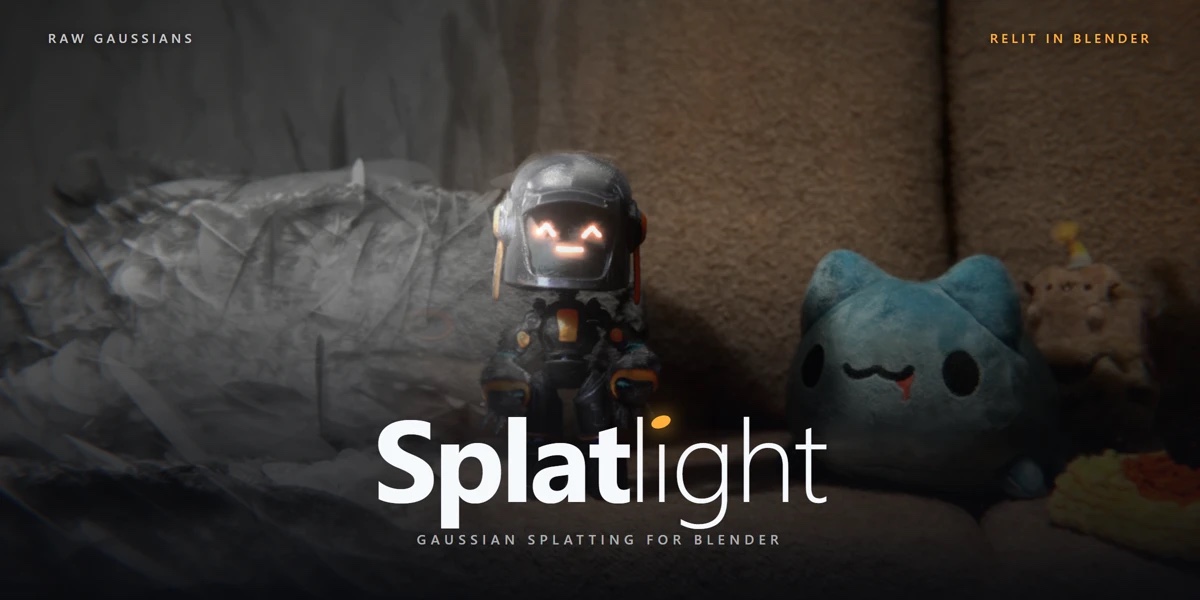
Image: Javier Herrera · Tools

Aug 13, 2026, 11:10 AM ETTools
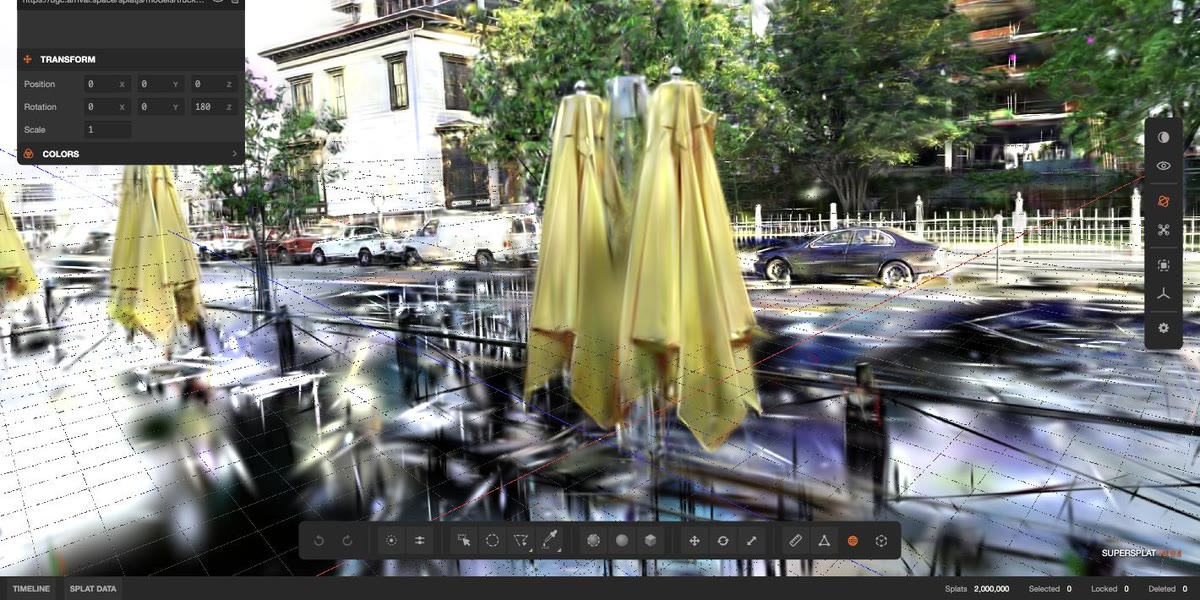
Splatlight, a new Blender add-on from developer Javier Herrera, makes imported gaussian splats respond to scene lights and cast self-shadows — ending the era of splats that carry their capture lighting baked in and ignore every lamp around them.
Why it matters: Splats have been photorealistic but frozen: the lighting from the moment of capture is welded into the data. Making them behave under DCC lights is the ecosystem's current frontier — SideFX shipped Houdini relighting nodes just days ago, and Herrera credits Houdini's self-shadowing as the prompt for building this.
Zoom in: Shadowing is derived from each gaussian's own opacity, so shadows stay soft where the capture is wispy and solid where it's dense. One slider crossfades between the original captured appearance and a fully lit object.
It supports Blender 4.2 through 5.2, ships under the GPL, and renders in EEVEE and Cycles — though Herrera advises against Cycles, where the transparency light paths the method depends on tank performance.
By the numbers:
- The free LITE tier is the whole relighter: import, shading, relighting, self-shadowing and export back to standard .ply.
- Pro costs $35 and adds proxy-mesh binding — one click builds a watertight proxy so splats ride armatures, lattices, shape keys, cloth and softbody — plus PBR transfer, cleanup tools, 4D timeline playback and COLMAP/nerfstudio camera import.
- A bundled generator trains a 3DGS scene locally from any video with camera motion; another builds a splat from a single image; a third imports prompt-generated worlds from World Labs' Marble at roughly $1.20 a world on the user's own API key.
Between the lines: That's two splat-relighting toolsets shipped inside a week, in two different DCCs. Relighting has quietly become the competitive front in making splats an editable medium rather than a display format.
Go deeper: