Pull an object out of a splat you didn't capture
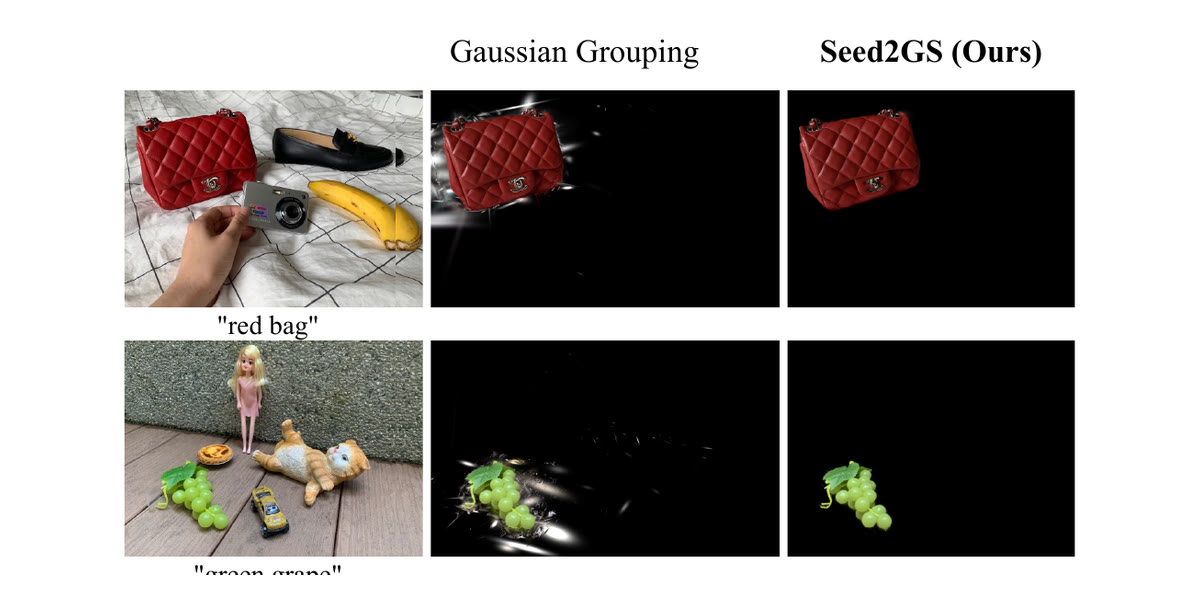
Figure: Ding et al., Chinese Academy of Sciences · Research

Aug 16, 2026, 7:20 AM ETResearch
Zongjian Ding and colleagues at the Chinese Academy of Sciences, HKUST, Zhejiang University and the Beijing Institute of Technology report the highest published LERF-MASK accuracy for object extraction from a pre-built splat scene — with the scene frozen and no access to the cameras that built it.
Why it matters: Most 3D editing workflows receive a finished splat, not a capture session. The source images and reconstruction cameras are somebody else's, from months ago, and were never shipped with the asset.
Nearly every existing extraction method assumes otherwise — it wants the original cameras back, or it wants to train a per-scene representation for tens of minutes before you can ask it a question.
The insight: The authors separate two things that earlier methods tangle together: identity — which object do you mean — and coverage — where does it extend in 3D.
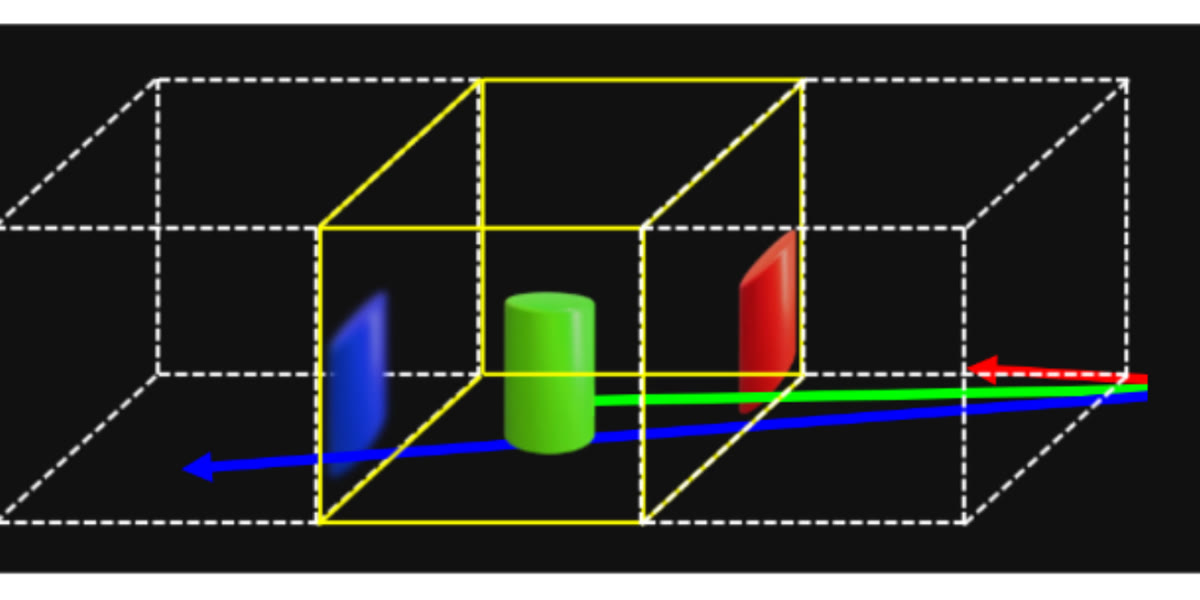
Identity is fixed once, from a single reliable reference mask chosen among open-vocabulary candidates. Coverage is then built up by lifting that seed and orbiting virtual viewpoints around it, with tracking carrying the seed forward instead of re-detecting the object in every view.
By the numbers:
- 92.1% mean IoU on LERF-MASK, 3.7 points above the strongest scene-trained baseline and 7.6 above the closest camera-free one.
- 9.3 seconds of measured compute-only latency, against tens of minutes for scene-trained methods.
- 95.7% mIoU on 3D-OVS.
- With one fixed reference view per scene the full pipeline still holds 91.1% mIoU.
- Swapping the predicted seed for a ground-truth mask gains only 0.72 points — the seed selection is close to the ceiling.
The tell: In the comparison figure the baselines don't fail by missing the object — they smear. Pull out a red bag and you get the bag plus a haze of background gaussians dragged along with it.
That difference matters more than the mIoU gap for anyone actually editing: a clean extraction is an asset, a smeared one is a cleanup job.
What's next: The scene stays frozen throughout — masks supervise a single temporary foreground value per gaussian rather than modifying the representation, which is what makes the query cheap and repeatable.
Nine seconds is the number to watch. It is the difference between an offline batch process and something that can sit behind a click in an editor.